

Non Threatening Boys*: 'Cherub' Explores the Intersections of Masculinity, Fatness and Sexuality
"For queer men, you’re automatically sort of siphoned into various subcultures based entirely around what your body looks like."
Words: Rob Corsini
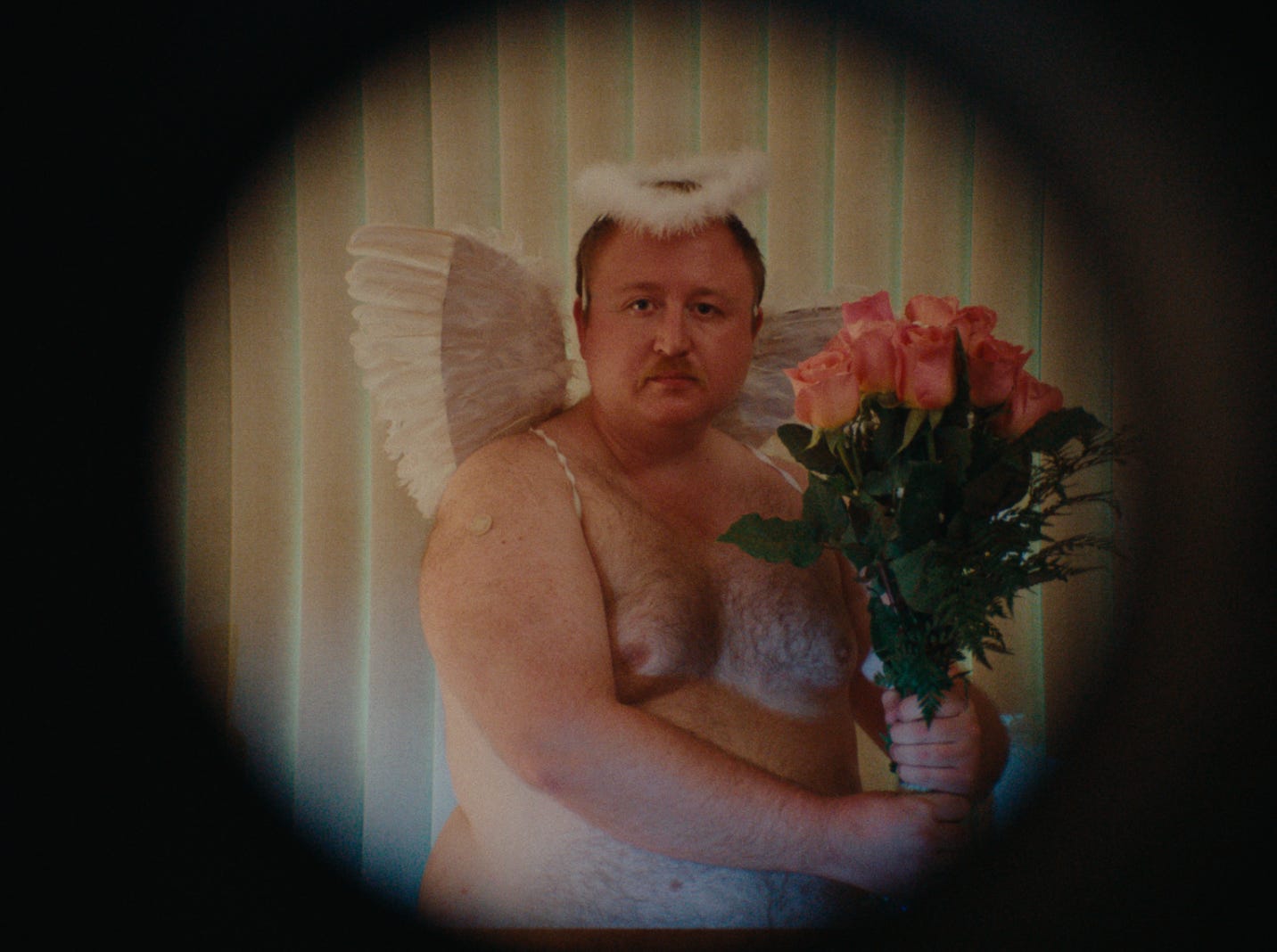
Harvey is a straight, fat man living in Toronto at the turn of the century. He spends most of his days alone - watching television, taking photos, people watching – and yearns for human connection. One day, as he browses the shelves of an adult video store, he finds a copy of a magazine for big men and their admirers, called Cherub. As he flicks through the pages, he sees fat bodies sexualised and celebrated in a way that was previously hidden to him. What follows is a re-evaluation of his own body, and eventually, he decides to submit a photo of himself to the magazine.
Harvey is the protagonist of the film Cherub, which director Devin Shears was inspired to make after reading a Belgian gay magazine called The Fat Angel Times. While media for gay, fat men is usually hypermasculine, The Fat Angel Times featured self-shot, tender portraits that sat alongside the expected pornography.
In our conversation with director Devin Shears and star Ben Turnbull, we talk about how fat bodies are sexualised, the difference between loneliness and being alone, and visibility, invisibility, and objectification.
Polyester: Hi Devin and Ben. One of the points of genesis for Cherub was the chub and bear magazine The Fat Angel Times – can you talk to me about the ways you think fatness, masculinity, and queerness intersect?
Devin Shears: I was a fat kid, fat teenager, fat adult - all the way through - and I’ve always felt like that really has been tied directly to my sexuality and my gender presentation.
The bear world being hyper-masculine is something that’s always been off-putting to me, and because of that there’s this sense of alienation from your body, which I tried to bring into the film. Someone very out of touch with the idea of their body as a space of expression. Fatness as something that’s separating you from others - and actually using it to connect was a guiding principle.
When you were creating your visions of Harvey, who was he to you? What were you thinking about?
Benjamin Turnbull: For my part, he was a character I could really identify with. It’s really not that dissimilar to my own experience. I think I have my shit together a little bit more emotionally, maybe? But, in a lot of my adult life, I’ve been very depressed and I’ve felt very alienated and isolated. I can recede a lot. And so I think I was just able to kind of remember what it looks like physically - which to me is a sort of stillness.
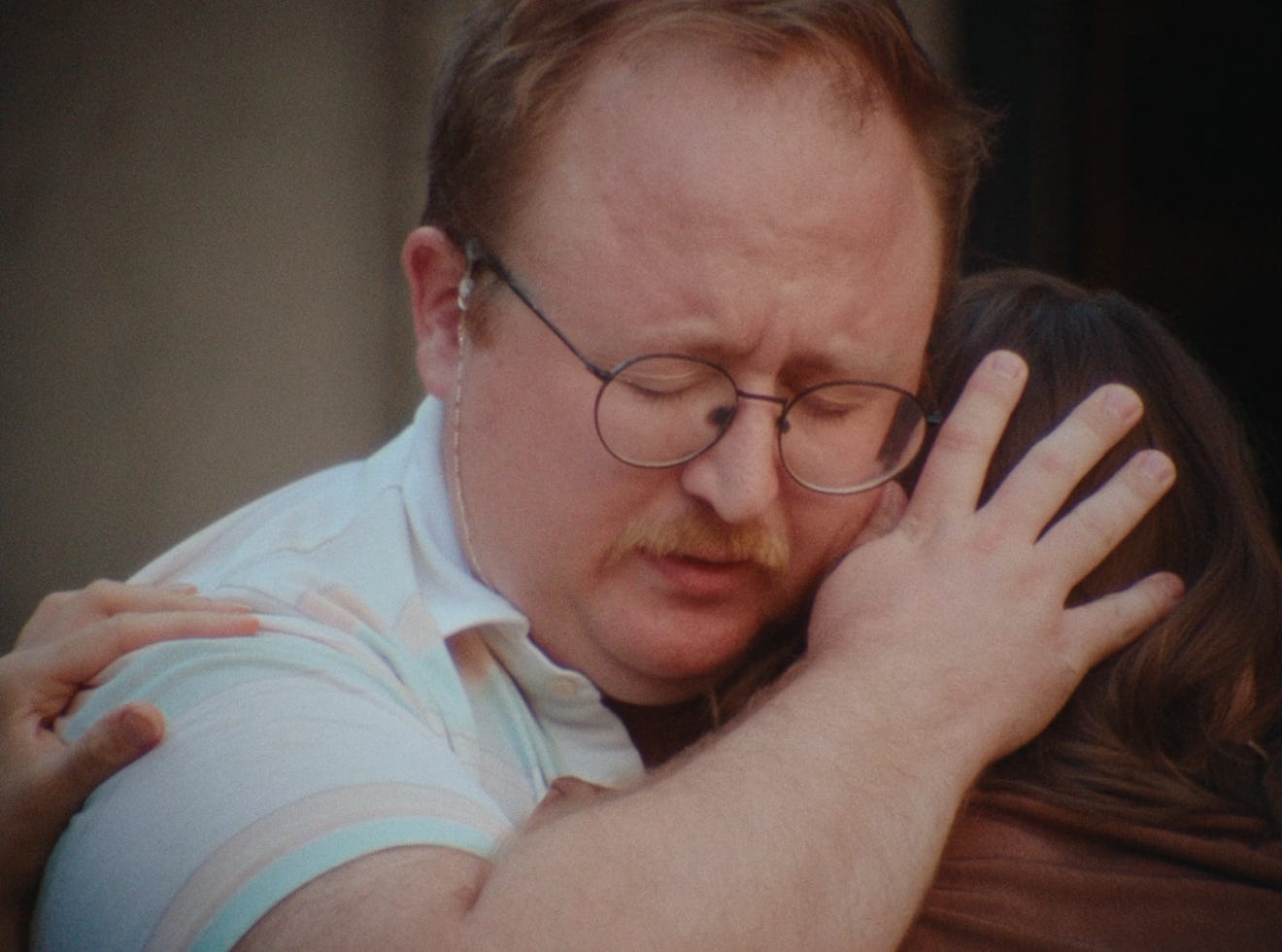
One of the things that is really apparent in the film is that Harvey is alone for so much of it – before we talk about loneliness though, how do you think it differs from being alone?
DS: I like that distinction between loneliness and being alone. Being alone can be very generative, it can be very playful. So much of who you are as a person is tied to your relationships and people around you, and then when you’re alone you can kind of shed those a little bit.
There’s parts of this film that still speak to that sadness, but the central bit of empowerment in the film is that he is alone and makes these beautiful images.
BT: This wasn’t like a miserablist portrait of a fat, lonely guy - of which we have seen many.
DS: The Whale loomed because it had just come out when I started my Masters.
BT: It was whatever the opposite of a guiding light would be. A warning sign, maybe. In some scenes you can tell he’s very lonely and yearning for connection, but in others you see he has a rich inner life - he goes out, does activities - even if they’re not social.
As I was thinking about loneliness in the film I began to think about the epidemic of male. With straight men, loneliness is seen as this as a force that turns into toxicity, hate, inceldom – why doesn’t that happen to Harvey?
DS: I think because he does come across a community in this extremely abstracted way at the end of the film, there is this sense of exchange that the character has. To me, this was always very much a story about a person, discovering that they possess something that they didn’t even understand that they had. They had a certain expectation of what they could give in life, which they thought was very little, and then there’s another world in which they can offer something. Maybe it isn’t what they would have wanted, or isn’t necessarily what they would have expected.
BT: A lot of these young straight men who turn into incels feel like they’re never given an opportunity to actually express something that they might have to offer that is positive and isn’t toxic.
Outside of loneliness, there’s also visibility. I read a review of Cherub that said it seemed like shots felt like they would have existed whether Harvey was in them or not, why do you think he’s unnoticed in this way?
DS: Being fat, there’s this dual contradiction of being both hyper-visible and invisible. On one end he would feel totally unseen by the world – in the same room as people and not acknowledged at all.
But on the other hand I think there’s been a lot of conversations about visibility and being visible. That’s its own kind of nightmare, because with that comes shame and humiliation - as well as empowerment. I didn’t want to shy away from that element of it, the sense of shame that people have from their bodies comes from the way they assume other people perceive it.
When Harvey finds Cherub magazine, it’s a view into a world in which he’s seeing bodies sexualised in a way that he has never before. How do you think queer, male fat bodies are sexualised differently to their straight counterparts?
DS: For queer men, your body ends up shaping so much of your relationship with the community. You’re automatically sort of siphoned into various subcultures based entirely around what your body looks like. It can be very frustrating, but also while I was also kind of figuring all this stuff out as a fat teenager - walking through the world assuming that I’m just like totally unlovable, unfuckable, whatever - that switch flipping in your brain and starting to understand that’s actually not the case changes your perception of yourself, and it changes your relationship to your body.
I learned that because I’m gay and you kind of have to learn these things fast. And I guess I just always wondered, if you’re, like, a straight fat guy would that happen. Maybe you don’t have to think about your body as much? I’m not sure. This is kind of a way to explore that.
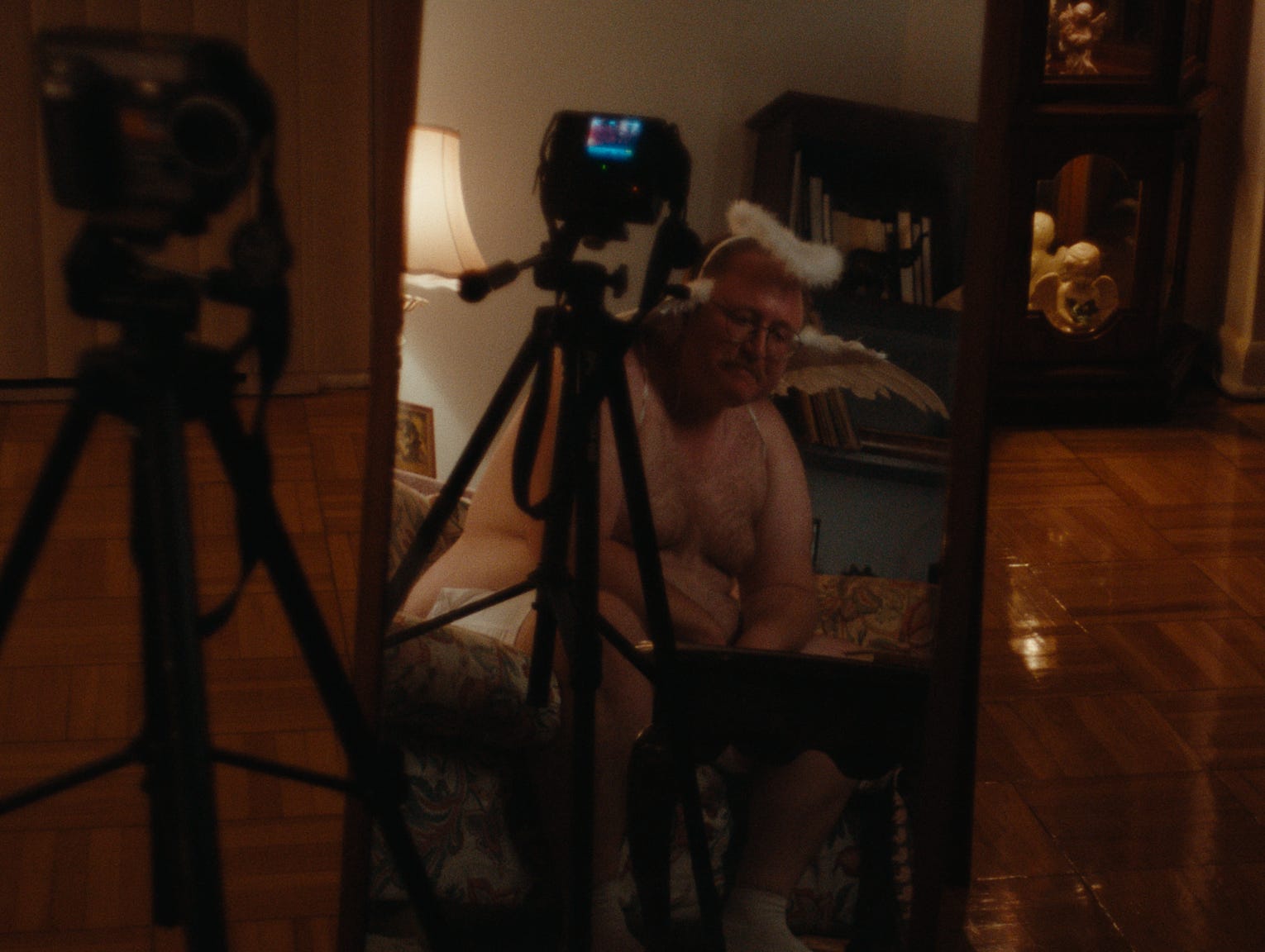
As Harvey sees bodies like his objectified in the magazine he finds, he’s able to see his own body differently. How does the process of being viewed in the eyes of others change his outlook?
I’ve had people comment on the subject of objectification in this film – asking if Harvey finds confidence or self-acceptance through a process of objectification - and I would say he does. I think there are times where people want to be objectified a little bit, sometimes that’s what it means to embody your sexuality. I think that that can be alienating at times also, but people are drawn to it for some reason.
So much of your life is tied to your body in more ways than people consciously realize. If you have the sense that nobody thinks you’re beautiful or attractive, that’s something that’s hard to move through the world with. The hope was to explore what that kind of transformation could offer somebody who hadn’t had it before.
If there’s one thing you wanted people to take away from the film, what would it be?
DS: I think we just spent a year with this character, and we really came to love him. I just hope when people watch the film, they feel that as well.
Non Threatening Boys* is Polyester’s platform for exploring all things masculine. To read more of our work, visit our Dollhouse platform, and subscribe to get Non Threatening Boys* directly to your inbox every other week.